Fin MacDonald

Information on me and my current projects

Category Archives: Nova Scotia Community College

Sustainable Transportation at my Campus

This week at my campus is Sustainable Transportation Awareness Week. I am on the executive of the student association and I am organizing this event. This week we are giving out prizes to encourage people to use sustainable transportation. I am also using the event as a learning exercise for LEED for Existing Buildings. The event kicked off on Friday with a transportation survey. The survey meets the requirements of LEED EB:O&M Sustainable Sites Credit #4. Normally there would be a mandatory minimum number of responses to the survey but we don’t have the authority to make it mandatory. We are also only sending it out on one day, instead of for an entire week like LEED requires. The survey should give us an idea of the times of commutes that students and staff take. We will be giving out a cash prize to one randomly selected person who responds to the survey.

Every day this week you can be entered into a second draw if you use sustainable transportation to get to school. We will accept walking, cycling, or any other non-motorized transportation. Also accepted are hybrid or alternative fuel vehicles, and carpools of 3 or more people in a traditional vehicle.

On Friday of next week we will be doing “Crazy but Safe Sustainable Transportation Day.” We will be giving a prize out to one random person who uses an unconventional method of transportation to get to school. Some examples might be roller skates, skip-it, or stilts. This day is designed to bring awareness to the need for sustainable transportation, and to be fun.

The student association executive at our campus this year is made up entirely of students in the Energy Sustainability Engineering Technology program. I expect that we will have several new green events over the course of the year.

The results of our transportation survey.

EEBE Project Update

We are now 3 days into the Energy Efficiency and the Built Environment project and there have been some changes to the work that we will be doing. We will not be auditing Habitat for Humanity homes as we had originally planned. The reason for this is that we were not able to get architectural drawings for those houses, and without drawings we would need to measure which would add hours to the project. Because the timeframe is only 3 weeks we have selected different homes to allow us to focus on learning the skills that are most important.

We were put into teams and each team will conduct an audit. Our team consists of:
Fin MacDonald (Me) – NSCC, Energy Sustainability Engineering Technology
Sarah Mitchell – NSCC, Contruction Management
Arwin Hidding – Hanze University (The Netherlands), Architecture
John Booth –  ITCarlow (Ireland), Construction Building Services

The project based learning approach places us in groups with diverse skills so we can draw off each others talents. Some of us are early in our study and some of us are at the end, so our skills levels vary. There will be lots to be learned during this project.

The house we have chosen is the larger of the two. It has 3 floors including a basement. It also features some complex roof geometry. It will be more challenging to model but we chose it because it comes with 2 years of utility data so we will be able to benchmark the consumption.

Our group is currently working on a HOT2000 model of the home and today was the first day some of my group members have seen this software before. The HOT2000 model will allow us to calculate the energy load of the building as well as determine the feasibility of building upgrades. We are also creating a 3D model of the home in Autodesk Revit. Revit is a similar program to Google Sketchup but with much more advanced features. We will be calculating the Building Energy Performance Index (BEPI) and Building Energy Cost Index (BECI) as soon as we get the past utility data. These indices will allow us to benchmark the building against others in Canada. They will be normalized for building area as well as weather to aid in the comparison.

The on-site audit will take place next week, and I will provide another update after that happens.

EEBE Phase 1 – Habitat for Humanity Home Audits

The first phase of the Energy Efficiency and the Built Environment (EEBE) program with NSCC International will take place in Halifax, NS. I will be based out of the NSCC Waterfront Campus in Dartmouth during that time. We will be joined by students from Hanze University in the Netherlands and IT Carlow in Ireland. The 3 week project will be to perform complete energy audits of 2 habitat for humanity homes in the area. We will be broken into teams and each team will be assigned a house. We will visit the home to perform the physical audit and use tools like thermal imaging guns and a blower door. We will take measurements so that we can create an energy model using HOT2000, which is free software from Natural Resources Canada. The software will allow us to add upgrades and determine how they will affect the energy performance of the building. We will also be checking the houses against the LEED for Homes checklist to see how well they line up with some of the broader green strategies beyond energy efficiency. At the end of the 3 weeks we will prepare a report and presentation of our findings and recommendations.

Outside of the project work we will have some presentations and tours included in the 3 week period. We will tour Thermodynamics Ltd who manufacture solar panels for hot water heating. We will also be touring the Efficiency Nova Scotia demonstration homes built by Denim Homes. The new Halifax Seaport Farmers Market is also on our list.

William Marshall from Equilibrium Engineering will be training us on HOT2000. I’ve been trained already but I am looking forward to refreshing my knowledge. We will also hear presentations from Josh MacLean from Efficiency NS, Allan Read from ITCarlow, and Gualdino Duarte Pais from Hanze University.

This project will be my life for the next 3 weeks. I am fortunate to have instructors at my home campus in Middleton who are willing to meet me half way and allow me the to be away from classes for 3 weeks. I will still be responsible for the material covered during that time but will not have to attend classes.

Our teams will start each day at 8:30 am and work as long as it takes to complete the project. Outside of the project work we aim to be good hosts to our Irish and Dutch guests! We’ll be introducing them to some of what Nova Scotia has to offer culturally, and we will be meeting them at the hostel first thing on Monday to show them the way to school on the first day.


Energy Efficiency and the Built Environment

I recently learned that I have been selected to take part in a international exchange program through NSCC International. The program is called “Energy Efficiency and the Built Environment.” It is a joint venture between the Nova Scotia Community College, Holland College in PEI, Institute of Technology Carlow in Carlow Ireland, and Hanze University of Applied Sciences in Groningen, The Netherlands. This project based learning venture will feature students in Architecture, Civil Engineering, Construction Management, Electrical Engineering, Energy Sustainability, and Mechanical Engineering. It will be a great chance for me to get some experience working with people in other disciplines.

The first stage will be a three week project in Dartmouth, NS. Each of the four schools will work together with local community partners, industry and relevant agencies to solve energy efficiency challenges related to constructing and retro-fitting homes. A special emphasis will be on low income housing and efficiency awareness and education education for the owners and tenants.

In late February the team will travel to Carlow, Ireland to undertake a second project. The details of this project will be worked out in the near future. Upon our return from Carlow we will prepare a final report as well as a presentation for the Technology Showcase 2012.

This project will allow me to gain international experience and an international perspective on energy efficiency. In densely populated areas like Europe resources are much scarcer and energy efficiency is a much more urgent priority. For this reason they are further ahead in their construction and conservation methods. I’m excited for what I can learn from them.

NSCC Waterfront Solar Monitoring (Part 3)

Friday was my final day with NSCC Applied Research working full time. When I left Friday the monitoring system was not live. There are still some challenges to overcome with this very large project. When we replaced the wire with CAT5 network wire the system worked for a little while but then we started getting shorted bus errors. Because of the number of connections the resistance on the wire was too high. We will need to solder the connections instead of using quick connect clips in order to improve the signal. The WEL sends 5V over the 1-wire bus and because of the amount of quick connects we used for sensors runs we were getting too much resistance and noise on the line. We reduced the system to include only one of the evacuated tube collectors and the signal returned to normal. Once the soldering is done we can include the others again.

Our network connection is browning out as well. We are able to get a wireless signal on the roof with the equipment we have but we can’t keep it connected. This meant we couldn’t go live with the system. We will need to replace the antenna with something stronger. We have an access point on the roof for the solar photovoltaic monitoring and we may need to try connecting through that as well. That would require significant changes to the way the photovoltaic monitoring system communicates though so we would consider that a last resort.

I leave the project in the very capable hands of Dr. Alain Joseph and they rest of the crew. They will continue to move the project forward and I expect to see the system live this summer. I prepared a manual for them documenting the process of solar hot water monitoring using the WEL. I’m sure that will provide them with the knowledge transfer required for someone else to step in and continue the project. I have also agreed to offer them support on a part time basis as needed.

The experience of working on a large project like this one has been very valuable to me. We’ve worked through a number of different problems, and learned to anticipate things to go wrong. I know now that I shouldn’t expect anything to work right the first time. I also learned the importance of documenting your work properly, so that others can pick up where you left off.

Connecting a Pyranometer to the WEL

Getting a pyranometer to work with the Web Energy Logger (WEL) was a long process for us in the lab. A pyranometer is a device that measures the solar intensity in watts per meter squared. We used a 0-5V pyranometer from Apogee (http://www.apogeeinstruments.com/pyranometer/). This was a challenge because the WEL does not have a 0-5V input. We needed to convert the signal to 4-20 mA so that it could be read by the WEL. There is a benefit to 4-20mA though since it is a current signal and not voltage it doesn’t drop off when you use a long wire run. Originally we had an electronics student design us a signal converting circuit board because we had the tools to design and mill circuit boards here at the college. We found a company that manufactures boards like this (http://controlsignalconverter.com/) and it is much more practical to purchase them then make them in most cases.

When testing the pyranometer we noticed that the 4-20 mA signal would drop off around the 12 or 13 mA mark and saturate. The WEL would never receive the full 20 mA. We ran numerous tests with our equipment and determined that the problem was within the WEL itself. We spoke to the manufacturer of the WEL and he explained the problem and how to fix it. It requires some cutting to fix it. There are two zener diodes inside the WEL that need to be snipped off. To do this you need to remove the rabbit board network chip by wiggling it and lifting it at the same time. It is fairly snug so you will need to work at it to get it off. Once it is off you will have access to the zener diodes and you can snip them out with some wire cutters. You will see them next to the green 4-20 mA plug on the WEL sandwiched between two resistors. I took a picture of our board with them removed below and have identified where they used to be with a red circle. Once we removed the zener diodes it worked perfectly.

You need to scale the numbers in order to get the proper engineering units. We used the formula f(x)=78.125x-312.5 to convert the 4-20 mA signal into watts per meter squared. This was specific to the equipment we used so if you use a different pyranometer you will need to do the math yourself.

Pyranometers are important for research because they allow you to see how solar panel output changes with solar intensity. We are particularly interested in how solar performs in the winter time in our climate. It is cold but often the sun is shining. With a pyranometer in our system we will be able to draw more meaningful conclusions from our data.


Web Energy Logger Repair Job Today

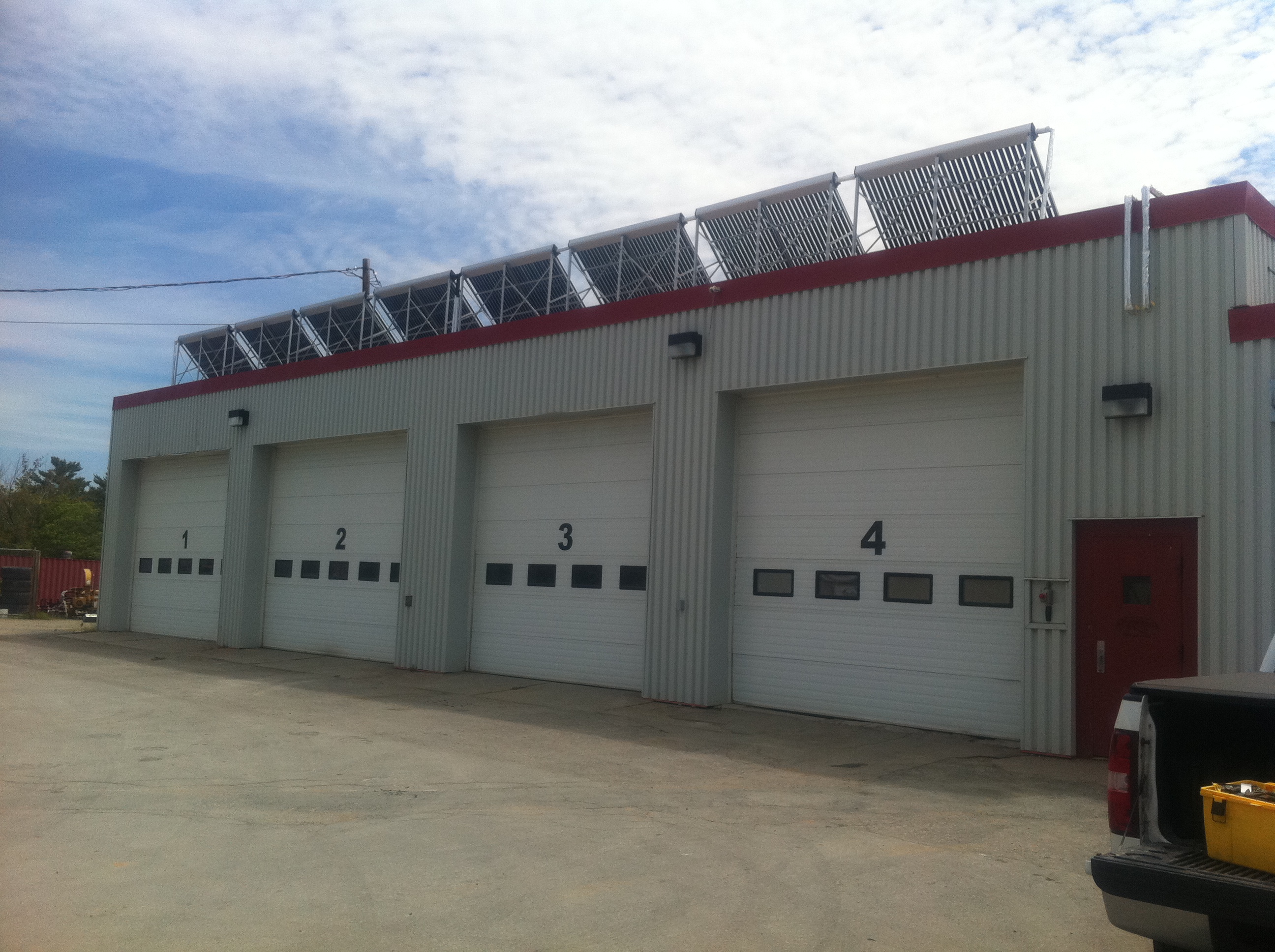
Today I travelled to Bridgewater, NS to help an industry partner repair a Web Energy Logger (WEL) installation. The solar system uses 30 evacuated tube collectors to supply heat to an in-floor heating loop and dumps the heat in the summer time. Since I did not take part in the original monitoring system installation this presented challenges that were new to me. I had to look over the monitoring system to understand what it was doing before I started work. I needed to not just be able to understand how it was working, but also make sure that it was working. I located the sensors that were installed and tested their readings against readings on my temperature gun. I found one sensor that was not reading properly and replaced it with a new one. I also installed a current sensing switch on the glycol pump to detect when it is running. Since the in-floor heat loop has a constant flow rate we don’t need to install a flow meter to determine the heat provided by the system. I programmed the WEL with some thermodynamics calculations related to mass flow and it now calculates the energy output in kWh.

The repair job took just over an hour and I gained valuable experience in interpreting the work of others. Its easy to jump in and repair a system you set up yourself but when you are trying to follow the work of others it can be a challenge. Pictured below is the box containing the WEL and router (LEFT) and the building with evacuated tube solar collectors on the roof (RIGHT).


Lock Out / Tag Out for Solar Photovoltaic

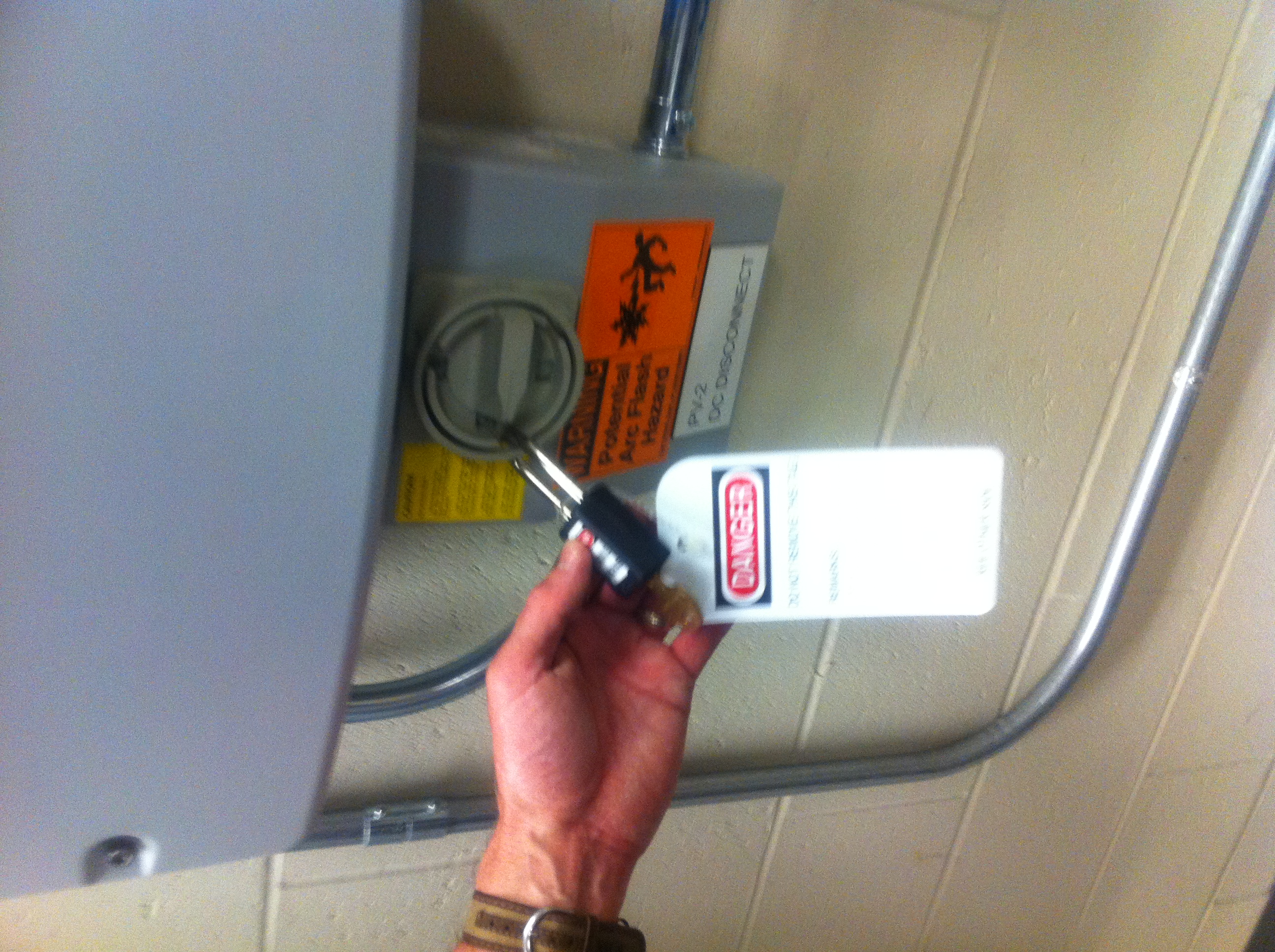
Today Travis, Gord, and Alain installed the Programable Logic Controller (PLC) system they designed to monitor the solar photovoltaic. Photovoltaic panels are the solar panels that produce electricity. Since there is electricity involved extra precautions need to be taken when doing work on the system. Lock Out / Tag Out is a procedure that involves turning off all sources of electricity and locking them in the off position with a padlock. It also requires a tag be added to the lock explaining what is happening. The key to the lock is kept so that only the person performing the work can turn the equipment back on. This prevents someone from inadvertently turning the power back on and electrocuting those doing the work. Gord Wilkie presented the procedure to Gary Williamson who is the facility manager and it was approved.

The lock out / tag out procedure was:
1) Open the solar AC disconnect and lock and tag.
2) Open the solar DC disconnect and lock and tag.
3) Securely cover solar panels with an opaque tarp.
4) Measure DC strings and ensure voltages are at zero.
5) Issue work permit.

Once the work permit was issued they installed the PLC monitoring system.

When they were finished the steps were:
1) Surrender the work permit.
2) Ensure all covers on monitoring box are in place.
3) Remove tarp from solar panels.
4) Close solar DC disconnect by removing the lock and tag.
5) Close solar AC disconnect by removing the lock and tag.

Safety is paramount when working with high voltage and I am happy to report that nobody way hurt. Their PLC system is working and we will start getting data immediately.


Solar panels covered by a tarp

NSCC Waterfront Solar Monitoring (Part 2)

The solar thermal monitoring project is moving along despite a couple of setbacks. We received the wireless equipment in the mail and were able to set up the wireless bridge to the schools wireless network. We used a directional antenna to improve the reception because the school’s wireless signal on the roof is weak.

We put a 12V deep cycle battery on the roof and we did a test run. It was able to power both the router and the Web Energy Logger (WEL). The battery is rated at 90 amp hours and the load for both the WEL and router is 0.4 amps combined. This means we are able to get over 3 months of power off the battery before we will need to swap it out for charging. This is good news because the battery is very heavy!

Testing with the pyranometer hit a bit of a wall initially. As I mentioned in my previous post the pyranometer measures the solar intensity in watts per meter squared. Since we are converting the 0-5V signal on the pyranometer to a 4-20 mA (milliamp) signal for the WEL we needed to scale the results. We did the math calculation and did a test run. We weren’t getting to the proper numbers in the upper ranges. Once we were confident the math was correct we tried numerous 4-20 mA devices with the WEL and had the same result. It really pays to have an electrical engineering student around when you are trying to troubleshoot electrical problems. Travis Keeping is our electrical expert at the lab and he a bunch of tests for us. In the end a call to Phil Malone from OurCoolHouse.com who designed the WEL was all it took to discover our problem. Turns out that the WEL has a defect and there are two zener diodes that we will need to snip out of the circuit and it should work fine after that. Phil also told us that new versions of the WEL will have a voltage port so we won’t need to convert the signal in the future. We have another WEL on order and it will have the voltage connection on it.

The wire we chose for the sensor wire run was cheap wire and it started giving us grief. We used a 75m run and it had too much resistance because it wasn’t twisted pair wire. Twisted pair wire helps to reduce the electrical noise on the signal. We started getting “shorted bus” errors on the WEL. I took the wire run down and we will be replacing it with CAT 5 wire, which is what is used for computer network cables. Once the new wire is installed we should be able to go live.

On the Road to Renewable Energy (Again)

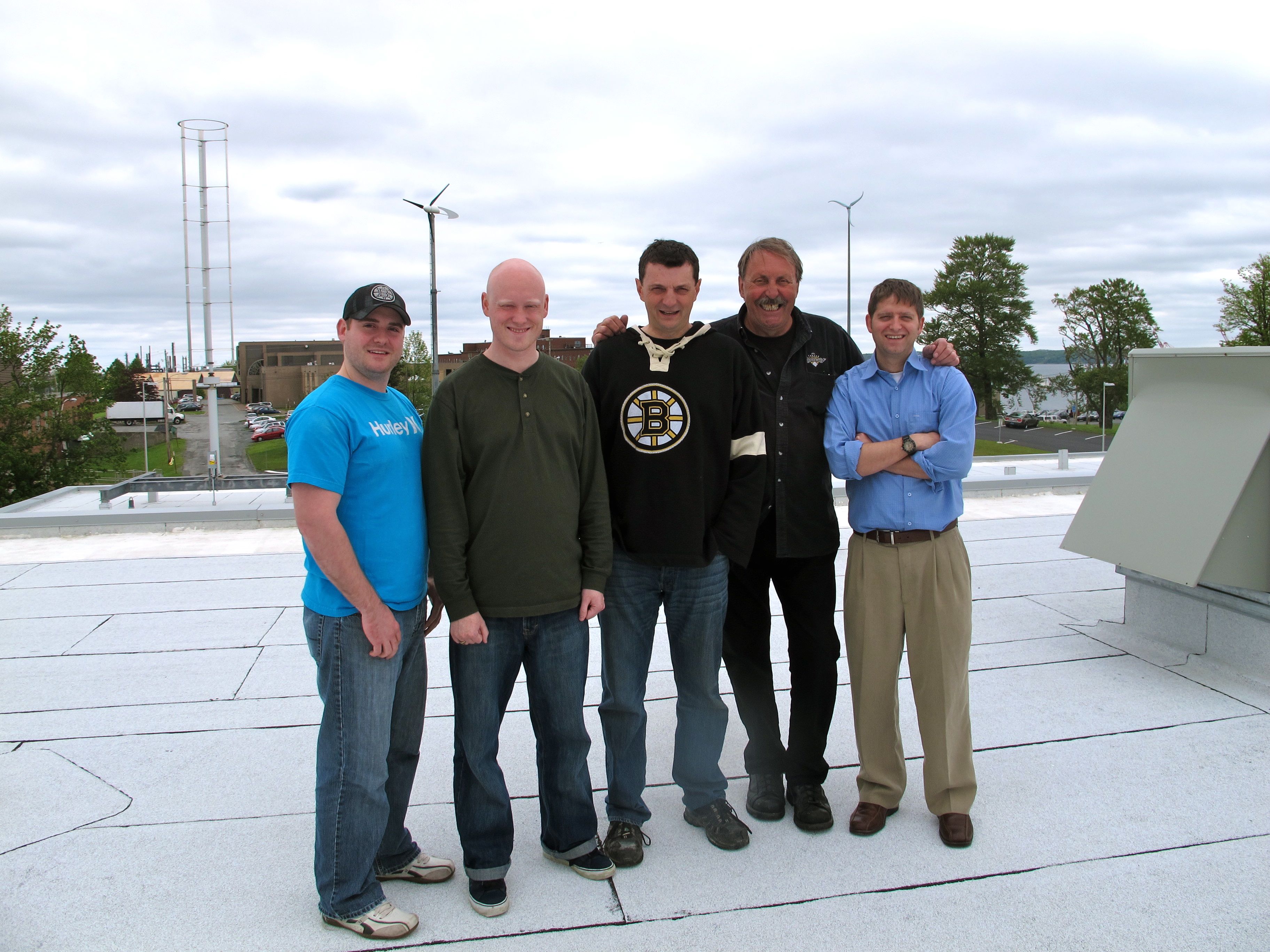
Today we had a visit from Wayne Rostad at the research lab. Wayne is the former host of CBC Television’s “On the Road Again.” Wayne is building a house in Jeddore, NS and it is too remote to be connected to the electrical grid. He came by the campus to see some of our renewable energy equipment in operation and get some ideas for an off-grid system. He has a lot of wind at his location so we showed him some wind turbines in different energy classes to give him an idea of his options. We also showed him some solar photovoltaics as well because he is considering a wind/solar hybrid system. I hope we’ve left him with some good ideas for his home! I think there might be potential for LEED (Leadership in Energy and Environmental Design) certification as well. Since his home is not finished being built it is a candidate for LEED for Homes.

Wayne is no stranger to the camera so we snapped some pictures with him before he left.