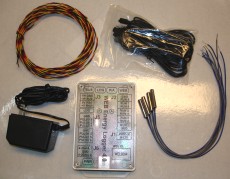
The WEL is a low cost but effective data logger that can be used to monitor energy use or generation. It contains a one wire bus that allows digital sensors to be strung along like christmas tree lights. It also contains 6 pulse inputs, 8 run inputs, and 2 4-20 mA analog inputs. Pulse sensors return an electronic pulse signal and applications may include paddlewheel flow meters for water flow. The digital pulses can be counted and converted into a volume flow rate. Run sensors tell you if the device connected is on or not. Current switches can be installed over power cables to current and return an on/off signal. 4-20 mA sensors send a mA current signal that can be scaled into engineering units.
Inside the WEL you are allowed 150 variables. These can be sensor inputs, constants, or simple expressions of other variables. The WEL has limited internal memory so it is limited to simple 2 variable expressions and is not capable of doing exponents or square roots. That being said most energy calculations can still be performed inside the WEL. It also has support built in to maintain running totals for the day, month, or year of any variable.
The WEL uses a rabbit board network chip to connect to the internet and transmit the data. It can be set to log data at any frequency, entered in minutes. By default it connects to the WELserver (http://www.welserver.com). This webpage contains a map of the world with all the other WEL’s shown on it. It is a great tool because it allows you to not only monitor your system, but see how others are doing as well. With some ingenuity you can connect the WEL to your own server to record and present the data there. The WEL posts data that can be received by a simple CGI or PHP script.
Typical WEL applications include monitoring of geothermal, solar thermal, solar photovoltaic, and energy use. The WEL is diverse enough to be used in other applications as well. A device called the WattNode (http://www.ccontrolsys.com/w/Advanced_Pulse_WattNode) must be added if you want to measure alternating current.



 Fin MacDonald